-
Sale!
 Julian Elliott and Rod Nicholson debate the issues behind the assertions that dyslexia is a clearly delineated condition diagnosed on the basis of appropriate cognitive tests with corresponding forms of intervention.
 -
Sale!
 Dyslexia Dyspraxia and Mathematics is written by Dorian Yeo, a teacher with many years experience of teaching mathematics to primary school dyslexic and dyspraxia children with a wide range of abilities. The book is designed to be a practical teaching guide. It offers detailed guidance and specific teaching suggestions to all specialist teachers, support teachers, or classroom teachers who either directly teach mathematics to dyslexic and dyspraxia children or who support the mathematics teaching programmes for dyslexic and dyspraxia children.
 -
Sale!
 This book by two of Europe's leading experts,Torleiv Hoien and Ingvar Lundberg, gathers together a vast amount of international research on the causes and remediation of dyslexia. It presents a cognitive model of the normal reading process and a processes-analytic diagnostic model. Much of the material appears in English for the first time.
 -
Sale!
 Edited by Nata Goulandris, this book presents current research into dyslexia in non-English languages including alphabetic languages such as Afrikaans, Farsi, French, German, Greek, Norwegian and Polish, and logographic scripts such as Chinese and Japanese. In addition one chapter considers the problems children encounter when reading braille.
 -
Sale!
 This book by Ian Smythe takes a bold step into the Digital Age of Dyslexia, and considers both the advantages that the use of new technologies will bring to support people with dyslexia, but also the challenges they face in accessing learning resources. Contrary to the naive view that ICT is a solution to dyslexia, the book makes plain that this is a complex field, but one that is worth exploring for its potential advantages. Written in a clear and accessible style, the book (and the accompanying web-based resources), will be an important resource for students with dyslexia and dyslexia specialists in all inclusive education settings.
 -
Sale!
 This second edition, edited by Maggie Snowling and Joy Stackhouse, moves on from the first edition which explored the relationship between spoken and written language. The second edition continues to link theory to practice and will be of great value to professionals in the field of education, speech and language therapy and psychology. All the original chapters have been updated and new authors have been included to cover current developments.
 -
Sale!
 Diane Montgomery presents a practical yet evidence-based book, showing teachers who work with pupils with dyslexia how they can effectively address areas of weakness. She introduces her popular Cognitive Process Strategies for spellIng (CPSS) and provides guidance on how this direct action can be successfully used in both primary and secondary contexts.
 -
 In this encouraging book Cornelia Jantzen presents effective ways of approaching dyslexia, drawing on her own practical experiences as well as research by prominent thinkers, practitioners and scientists. Dyslexia has long been known as a learning difficulty that primarily affects literacy skills. Increasingly, however, researchers and professionals working with dyslexia suggest that it is less a disorder than a sign of specially gifted people. People with dyslexia often have a highly developed imagination and a unique way of perceiving things. They frequently have above average intelligence and are highly creative, provided they are supported and nurtured by parents and teachers. In this book Cornelia Jantzen explores the basis of this radical viewpoint. Throughout, she provides many practical examples which explore the different aspects of dyslexia, and can give parents and teachers confidence in dealing with the challenges that it presents. This is a helpful and encouraging book for anyone looking for new insights into the enigma of dyslexia.
 -
Sale!
 This is a book of advice and guidance for dyslexic teenagers, written by Dr. Sylvia Moody. The first part explains exactly what dyslexic difficulties are and how to go about getting them recognised and assessed. It also explains about a related group of difficulties called dyspraxia. In the second part of the book there is advice on improving organisation and memory and literacy skills, and on dealing with negative emotions. In the last part there is advice about I.T. support and help organisations..
 -
 First Aid in Science, by Robert Sulley, gives all the help, support and practice needed for learning and revising Science. It is ideal for use in the classroom, or as a reference and revision book.
 -
 The book, by Maggie Agnew Steve Barlow, Lee Pascal and Steve Skidmore is a very informative, light hearted text with lots of diagrams and top tips for better study techniques and also better living techniques to improve student's concentration. It does not have to be read from cover to cover but can be picked up any time. Whatever page you flip to, you will learn something new that is interesting and fun that you are bound to remember to help you. This book is highly recommended for anyone with children at that critical age, or adults who have returned to study.
 -
 This powerful and practical best seller, examines remarkable research and developments in brain functioning while continuing its successful tradition of translating this information into effective classroom strategies and activities. In this edition, best selling author David A. Sousa explores source material on brain research, including basic brain structures, how the brain processes information, memory and retention and the transfer of knowledge to enhance present and future learning.
 -
Sale!
 Highly respected Author and researcher David A. Sousa explains the latest neuroscience findings in practical understandable terms and discusses the impact this information has for teaching mathematics at all grade levels. How the Brain Learns covers the cognitive mechanisms for learning mathematics, the environmental and developmental factors that contribute to mathematics difficulties and ways to differentiate mathematics instruction.
 -
 This book by David Sousa makes the important connections between reading and brain research accessible for teachers and parents.It also has a practical use in suggesting strategies and programmes for improving reading and comprehension in Key Stages 1 - 4.
 -
 In this completely revised second edition David Sousa builds on the latest data by examining both simple and complex learning strategies that can be adapted for students with learning disabilities such as ADHD/ADD;speech, reading, writing and maths disabilities, emotional and behavioural disorders, Autism and Asperger's Syndrome. Offering real strategies for real classrooms, Sousa's latest work is an indispensable tool for all educators, school administrators and preservice educators, as well as parents who want to better understand the way their children process and retain information
 -
Sale!
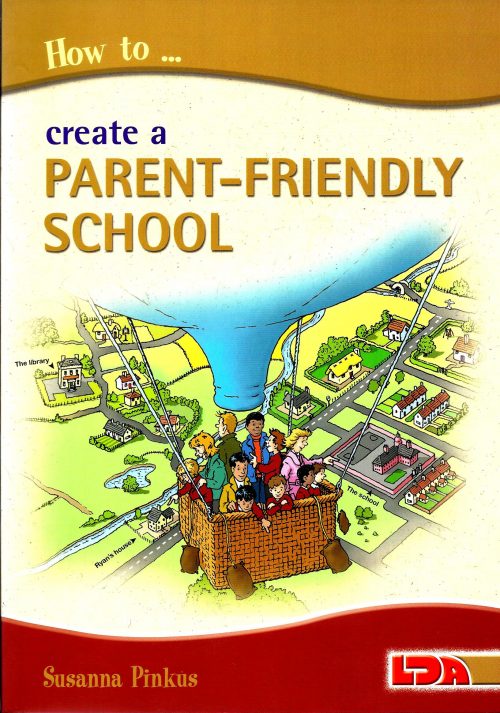
 Susanna Pinkus is an academic associate of the Faculty of Education, University of Cambridge.Her research interests includes working with families, special educational policy and practice and the role of happiness in education. This practical book is an essential resource for anyone in schools wanting to develop their relationships with parents. It includes sections that will explain why working with parents is essential, help schools tackle conflicts with parents and how to build strong and lasting relationships with them.